
Regulations
for the collective mark "V" to mark vegetarian goods, products and services in Europe
I. General
The collective mark "V" is an excellent way to profile European Vegetarianism,
as propagated by the European Vegetarian Union (EVU). The collective mark "V"
will enable the vegetarian organisations to position themselves as consumer organisations
by closing up the ranks and acting as an mediator between consumers on the one
hand and manu-facturers, producers and service providers on the other.
II. Owner of the mark
The European Vegetarian Union (short EVU) is the owner and bearer of all rights
to the collective mark "V". The conditions of these regulations are equally binding
for the EVU and all licensees.
III. Shape of the collective mark "V"
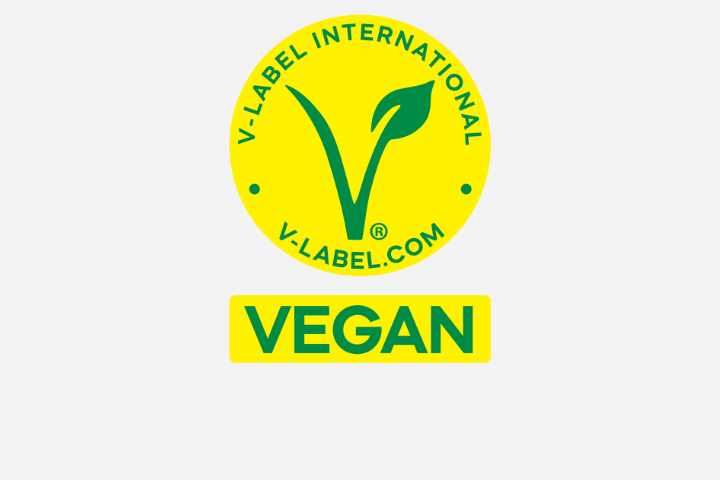
The collective mark "V" is protected in all sizes and colours. It has the following
shape:
Additional words like "Recommended by the EVU" or similar expressions in the respective languages are allowed.
For goods and products that do not contain any ingredients of animal origin the
word "vegan" may be added.
IV. Extent of the collective mark "V"
The collective mark "V" is protected in almost all European countries.
It labels the following goods, products, services and activities of organisations:
a) Goods and products
The collective mark "V" labels goods and products that are suitable for vegetarians.
The Collective mark "V" can only be used for products that do not contain any ingredients or substances made from slaughtered animals, for instance no flesh, meat, gelatine, leather, bones, or fats from slaughtered animals.
Eggs must be obtained from hens not raised in cages. The origin of the eggs has
to be confirmed in writing.
Products, which have to be marked as genetically modified, must not bear the "V"
label as well.
b) Services
The collective mark ”V” labels services suitable for vegetarians,
in particular restaurants, hotels, guest-houses, cafeterias, snack bars, hospitals,
etc.
Requirements for restaurants:
A restaurant must continuously offer at least one complete vegetarian menu which
should be changed as often as the ordinary menu. In addition to possible vegetarian
dishes available on the regular menu (soups, salads, etc.), the restaurant must
offer at least two dishes that are suitable for vegetarians.
Requirements for take-aways:
In each of the following 5 categories at least 10 percent of the offer have to
fulfil label requirements and must be marked accordingly:
–
warm dishes
–
toasts and sandwiches
–
salads
–
cold dishes (incl. cheese, without toasts, sand-wiches and salads)
–
deserts/sweets/cakes
If no offer is available in one of these categories, no vegetarian offer needs
to be available either.
The waiters and staff should all know the difference between vegetarian, vegan,
and raw-food menus, and be able to categorise accordingly all drinks and dishes
offered on the menu.
Similar conditions apply to hotels, guest-houses, cafeterias, snack bars, hospitals
etc.
c) Activities of organisations
The entitled societies (as indicated in clause V, sub 1) are allowed to use
the
collective mark "V" for their own activities (logo of the society,
printed
matter, promotional material etc.)
Individual members of the EVU may use the collective mark "V" in agreement
with the EVU secretariat.
V. Entitled organisations
- Apart from the EVU itself, the member organisations of the EVU are entitled
to use the collective mark "V" after having signed a licensing agreement with
the EVU.
- The member societies on their part enter into contracts with firms and service
companies on the basis of these regulations.
- The collective mark "V" may be granted to firms that distribute vegetarian
goods or manufacture vegetarian products such as foods and drinks, cosmetics
and toiletries, clothes and shoes, catering products and household goods.
It also applies to restaurants, guest-houses, hotels, hospitalt etc., which
serve vegetarian meals.
- The EVU acts as control authority of its member societies.
VI. Procedure
European vegetarian organisations (members of the EVU), desirous of using the
collective mark "V", conclude a licensing agreement with the EVU and
bind themselves to follow the regulations laid down in this agreement.
A firm or service company who wants to use the collective mark "V",
must contact and come to an agreement with a national EVU member organisation
and file an application for the use of the collective mark "V".
The appropriate member organisation is determined by the place of registered office
of the firmresponsible for labelling or the location of the restaurant, hotel
etc., respectively.
A list of all ingredients and manufacturing processes must be presented to the
national vegetarian organisation before using the collective mark "V".
The national vegetarian organisation will then decide - in consultation with the
EVU officer in charge if necessary whether a product may bear the collective
mark "V" or not.
Products awarded the mark "V", are reported to the EVU immediately after
the decision is reached.
At the request of the manufacturer, the national vegetarian organisation and the
EVU may bind them-selves to handle confidentially any infor-ma-tion regarding
ingredients and manufacturing processes.
In countries where no EVU member organisations are established or where the EVU
member organisations are not willing or able to market the collective mark "V",
the EVU reserves the right to enter agreements on its own behalf.
VII. Payments
The entitled vegetarian organisations (as indicated in clause V, sub 1) charge
a fee from the companies for the use of the collective mark "V". The
national vegetarian organisations pay 10% of this sum to the EVU.
The licence fee for the producer or may be subject to negotiation.
EVU recommends charging as a rule at least 250 EURO per year for each product,
carrying the V-Label.
An application fee is applicable.
The licence fee for a restaurant, hotel or guest-house should be based on the
size of this institution and may be subject to negotiation based on a recommanded
minimum of 75 EURO.
The use of the collective mark "V" is free of charge for the internal
use (as indicated in clause IV, sub c) of the member societies of the EVU.
VIII. Controlling
All those entitled to grant licenses for the use of the collective mark "V"
bind themselves to conduct a careful examination of the fulfilment of all conditions
for the use of the collective mark "V" before granting the use of the
collective mark "V" to a company. Such examination may be conducted
by the licensees or an external service provider.
Having once been granted permission to use the collective mark "V",
the company is obliged to reveal any and every change to the respective vegetarian
organisation. The company itself is under obligation to permit random sampling
without prior notice.
IX. Sanctions
The irregular use of the collective mark "V" represents a violation
of the collective mark and may be prosecuted by the owner of the mark not only
on the basis of the regulations and contracts but also on the basis of trademark
laws.
In the case of a violation of the agreement, the owner of the mark has the right
to cancel the agreement without notice. Moreover he has the right to demand the
immediate elimination of the defects.
If the vegetarian organisation which is entitled to use the collective mark "V"
incurs harm through the misuse of the collective mark "V", it may prosecute
the misuse on the basis of competitive laws, however not of trademark laws.
If a manufacturer, company or restaurant uses the mark "V" without permission
or does not fulfil its duties, a sanction of up to 5,000 EURO may be imposed.
Furthermore, the permission to use the collective mark "V" for other
products of the same producer may be withdrawn, even if other products fulfil
the criteria stipulated for this label.
If the manufacturer, firm or restaurant continues to use the collective mark "V"
after the first admonition, a fine of up to 50,000 EURO may be inflicted. Further
legal action is reserved.
X. Publicity
Once the EVU member organisations reach an agreement concerning the collective
mark "V", those organisations should also endorse that label, for instance
by communicating information about the labelled products to press and consumers.
Once a product is labelled and as long as the ingredients and manufacturing processes
do not change, there is no reason for the EVU member organisation to refuse the
endorsement.
XI. Promotional material
The basic material to promote the label is made available by EVU and can be elaborated in collaboration with the local vegetarian organisations.
The EVU assures to promote the labelled products by
Communication the actual list of labelled products on request
Announcing each new labelled product in the newsletter of the EVU and on
the EVU web site
back
URL: http://www.vegetarismus.ch/v/reglemente.htm